-
Name (Acronym)ICT Methods and Technologies for Energy Management, Transmission, and Control (ENETC)
-
Date28 July - 08 August 2025
(2 weeks, 30 hours/week) -
Teacher
-
Contact E-mail2024-2025.LM.ENETC.UniTN.TRENTO.IT@eledia.org
-
ECTS6
-
Syllabus
-
Institution
-
Study Program
-
Degree
-
LanguageEnglish
-
Tracks

ABSTRACT
In the rapidly evolving landscape of modern energy systems, the effective management, transmission, and control of energy resources have become paramount for ensuring sustainability, efficiency, and reliability. The course offers a comprehensive exploration of the pivotal role that information and communication technologies (ICT) play in addressing the challenges and opportunities within the energy domain. This course delves into the integration of advanced ICT methodologies and technologies to optimize energy utilization, enhance transmission efficiency, and enable real-time control strategies. Students will gain a deep understanding of the theoretical foundations and practical applications of ICT solutions tailored to the energy sector. To complete the didactic offer, various numerical exercises (exploiting SW programs) will follow the theoretical lessons.
COURSE FORMAT
The Course is taught in 🇬🇧️ ENGLISH and offered
- On-site
- On-line (synchronous and asynchronous)
with video recordings, hand-outs, etc. of the lectures available off-line. (*)
COURSE CONTENT
Part 1: ICT INTRODUCTION AND SMART GRID
- Fundamentals of ICT for smart energy systems
- Features and challenges to load flow in energy grids
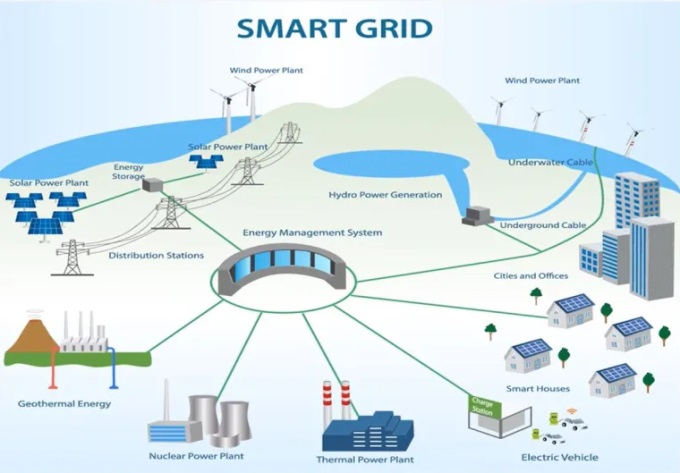
- Introduction to smart grid
- Emerging ICT technologies for energy management, transmission, and control
Part 2: SMART GRID TECHNOLOGY
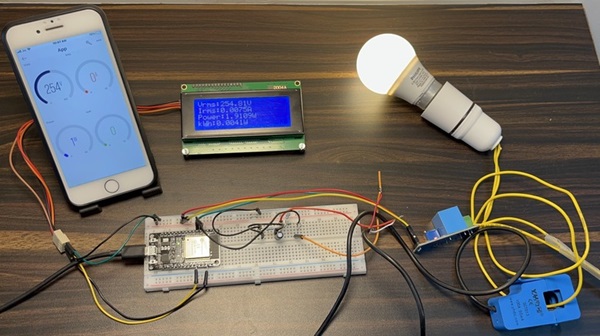
- Energy measurement and monitoring technologies (e.g., smart meters and appliances)
- Communication technologies in smart grids
- Data collection and management in smart grids
- Wireless energy transmission technology and systems
Part 3: PERFORMANCE ANALYSIS TOOLS FOR SMART GRID
- Importance of performance analysis in smart grid design and operation
- Key performance indicators (KPIs) for smart grid evaluation
- Advanced analysis techniques: sensitivity analysis, machine learning and AI techniques for performance prediction
- Real-time monitoring and control
- Simulation and modeling tools
Part 4: COMPUTATIONAL TOOLS FOR SMART GRID DESIGN
- Introduction to computational methods for smart grid
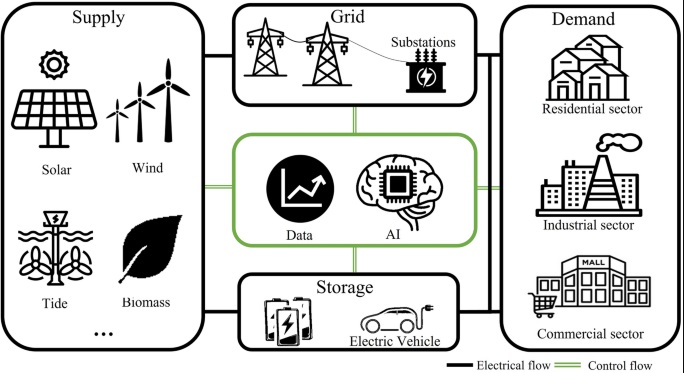
- Optimization and machine-learning techniques
- Game theory methods
- Decision support systems
TEACHING ACTIVITIES
- Theoretical Lessons
- e-Xam Self Assessment (each teaching class or periodically)
- MATLAB Hands-On
- e-Xam Final Assessment
FURTHER READINGS
- James Momoh, "Smart Grid - Fundamentals of Design and Analysis". Hoboken, NJ: John Wiley & Sons, 2012.
- Janaka Ekanayake, Kithsiri Liyanage, Jianzhong Wu, Akihiko Yokoyama, and Nick Jenkins, "Smart Grid – Technology and Applications". Chichester, UK: John Wiley & Sons, 2012.
- Naoki Shinohara, "Wireless Power Transfer: Theory, Technology, and Applications". London, United Kingdom: The Institution of Engineering and Technology, 2018.
- "ICT for Energy – Telecommunications and energy working for sustainable development". ITU Report, 2017 (https://www.itu.int/dms_pub/itu-d/opb/gen/D-GEN-EUROPE.02-2018-PDF-E.pdf).
(*) Each registered participant acknowledges that the material distributed in the frame of the course, available for the duration of one academic year, is protected by copyright and delivered for educational purposes and personal use only. The participant agrees and undertakes not to forward, publish, disclose, distribute, disseminate - in any form or manner - such a material without written consent of the author(s) of the material. Unless otherwise explicitly allowed by the speaker in written form, no recordings of the online lectures can be made.
Registration Information
| UniTN Students: | Free |
| EXTERNAL Students: |
216 Eu: First course 180 Eu: Every course from the second one |
The fees include the course teaching, video recordings, hand-outs, etc. (*).
Registration Procedure for UniTN Students
Please contact the Student Support Office of your Department/Centre/School to include the course in your study plan.
Registration Procedure for EXTERNAL Students
Step 1: Register a "guest" type account (@guest.unitn.it)
- Should you still not have a UniTN account, you have to register and log in with your SPID identity or CIE (electronic ID card). If you cannot use SPID or CIE, please create your own UniTN account.
Step 2: Enroll to a Single UniTN Course
-
Complete the online application through the dedicated webpage.
In the application form (Section "Teaching Activities") put the following information:- Name of single class/teaching activity: ICT Methods and Technologies for Energy Management, Transmission, and Control
- Code of single class/teaching activity: 140707
- Degree course to which the teaching activity is associated: [0337H] Ingegneria Energetica
- Once received the outcome of the application (1-3 days), login into ESSE3 with your "guest" account user-name and password. Then, pay the bulletin you find in Administrative Office – Payments.
NOTES:
- A vademecum with a step-by-step guide to enroll to a single course at the University of Trento is available here
- For any question on the registration process, please write to didattica@eledia.org
(*) Each registered participant acknowledges that the material distributed in the frame of the course, available for the duration of one academic year, is protected by copyright and delivered for educational purposes and personal use only. The participant agrees and undertakes not to forward, publish, disclose, distribute, disseminate - in any form or manner - such a material without written consent of the author(s) of the material. Unless otherwise explicitly allowed by the speaker in written form, no recordings of the online lectures can be made.