-
Name (Acronym)Quantum Electromagnetics (QEM)
-
Date16 June - 25 June 2025
(2 weeks, 24 hours/week) -
Teacher(s)
-
Contact E-mail2024-2025.LM.QEM.UniTN.TRENTO.IT@eledia.org
-
ECTS6
-
Syllabus
-
Institution
-
Study Program
-
Degree
-
LanguageEnglish
-
Tracks

ABSTRACT
There is currently an explosive advancement in quantum information processing technology underway that has the potential to revolutionize society through the use of quantum computers, quantum communication systems, and quantum sensors that can outperform the best classical technologies. Since these emerging devices significantly involve electromagnetic effects, there is an important role that classically‐trained electromagnetic engineers can play in making these quantum technologies a reality. This course looks at both sides of this emerging technology space. The course introduces the fundamentals of quantum electromagnetic theory, with application toward building a description of the quantization of electromagnetic fields. Then, the course introduces different paradigms of quantum computation and discusses how each approach can be used to solve electromagnetic analysis and optimization problems. The classes consist of theoretical/application lessons aimed at the presentation of the state of the art of the subject and the in‐depth study of innovative computational methods for addressing electromagnetic problems through the use of dedicated software tools.COURSE FORMAT
The Course is taught in 🇬🇧️ ENGLISH and offered- On-site
- On-line (synchronous and asynchronous)
COURSE CONTENT
Part 1: INTRODUCTION TO QUANTUM EM
- Importance of quantum electromagnetics
- Connecting electromagnetic oscillation to simple pendulum
- Hamiltonian theory and Schrodinger equation
- Quantum information science
- Hamiltonian theory of Maxwell’s equation
- Quantum theory of Maxwell’s equations
Part 2: QUANTUM INFORMATION THEORY
- Density matrix formalism: pure and mixed states; density operator and density matrix
- Quantum information: quantum decoherence and noise ; quantum entanglement
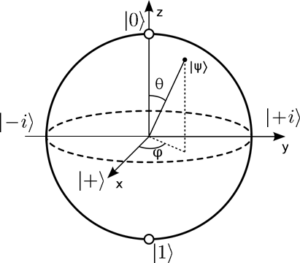
Part 3: QUANTUM EM APPLICATIONS
- Quantum communications: quantum key distribution; quantum teleportation
- Quantum computing: building blocks of a quantum computer; quantum algorithms and quantum optimization
- Quantum sensing: squeezed states; quantum ghost imaging
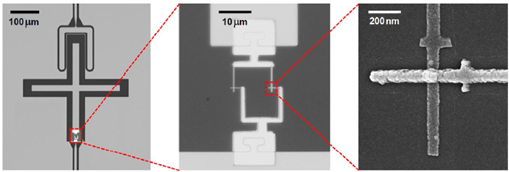
TEACHING ACTIVITIES
- Theoretical Lessons
- e-Xam Self Assessment (each teaching class or periodically)
- MATLAB Hands-On
- e-Xam Final Assessment
FURTHER READINGS
- W. C. Chew, “Lectures on Electromagnetic Field Theory”, Lecture Notes, Purdue University, 2022.
- T. E. Roth, “Fundamentals of Quantum Technology,” Lecture Notes, Purdue University, 2022.
- D. J. Griffiths and D. F. Schroeter, “Introduction to Quantum Mechanics”, Cambridge University Press, 2018.
- M. Nielsen and I. Chuang, “Quantum computation and quantum information”, Cambridge University Press, 2000.
- M. M. Wilde, “Quantum information theory”, Cambridge University Press, 2017.
(*) Each registered participant acknowledges that the material distributed in the frame of the course, available for the duration of one academic year, is protected by copyright and delivered for educational purposes and personal use only. The participant agrees and undertakes not to forward, publish, disclose, distribute, disseminate - in any form or manner - such a material without written consent of the author(s) of the material. Unless otherwise explicitly allowed by the speaker in written form, no recordings of the online lectures can be made.